LETENG / Pallet compatibility
Forklift vs Fork-Over Stacker:
Pallet Compatibility
Choose around the pallet underside, the entry direction and the space the machine needs. Nominal tonnage comes after the fit check.
Start underneath the pallet.
A pallet can accept the lifting forks and still be incompatible with a fork-over stacker. The reason is the second pair of members near the floor: the support legs must also enter beneath the pallet. Bottom boards in that path can prevent pickup.
A counterbalance forklift carries its balancing weight at the rear and has no front support legs beneath the lifting forks. That gives it broader pallet access, but fork openings, entry direction, fork dimensions and lifting capacity still have to match.
For the LETENG CDD15 and CDD20 shown on this website: review the actual pallet underside before ordering. A label such as “standard pallet” or a top-view photo is not enough to confirm fit.
Three layouts. Different access.
| Equipment layout | What to check | Purchasing implication |
|---|---|---|
| Fork-over stacker | Support legs run beneath the lifting forks. Check the clear path under the pallet. | Open-bottom pallets may fit; obstructing bottom boards can rule out the proposed arrangement. |
| Counterbalance forklift | No support legs occupy the space below the forks. | Useful to investigate for mixed pallet designs. Check the forks, openings and configured capacity. |
| Straddle stacker | Legs are positioned outside the load area. | A different design with its own leg spacing and route requirements. Do not assume it is the same as the CDD models listed here. |
The term “electric stacker” describes several layouts. Confirm the actual drawing and configuration in the quotation rather than transferring a pallet-compatibility claim from one type to another.
Record the entry path, not just length and width.
These two customer-supplied pallet examples show open areas between the feet. Check that the support legs can enter from the intended direction; confirm opening height, spacing and clearance against the exact CDD configuration.
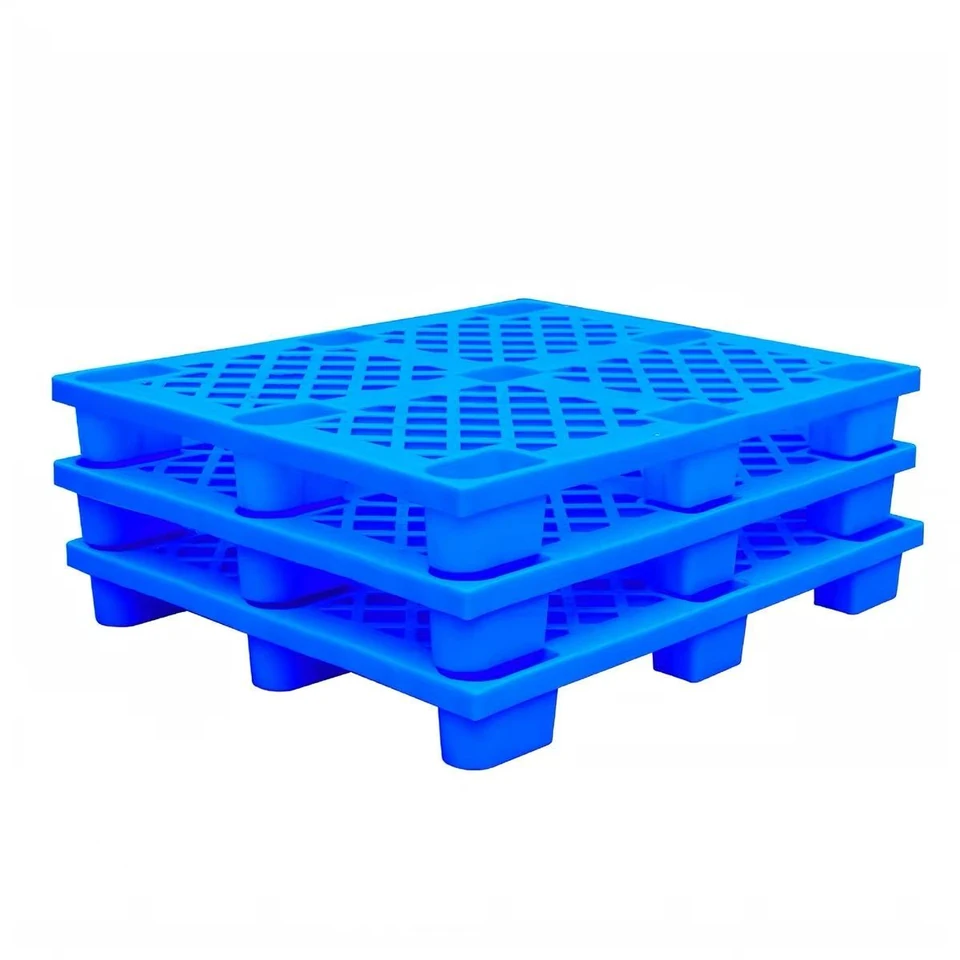
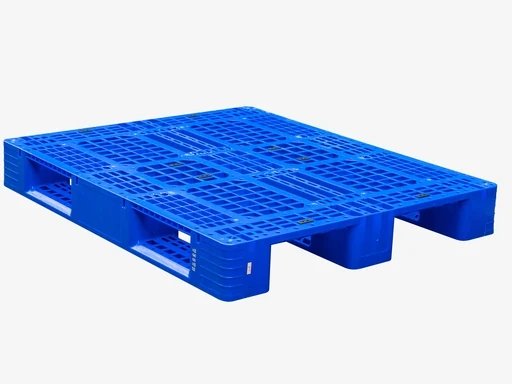
Use the same photo-and-measurement set for each pallet design you handle. If incoming goods arrive on different pallets, include those too.
- Photograph the underside. Show bottom boards, blocks and stringers clearly, with the pallet empty and safely positioned for the photograph.
- Mark the approach direction. A four-way pallet label does not confirm that every opening suits every fork and support-leg arrangement.
- Measure the openings. Provide clear opening width and height, spacing between openings, overall pallet dimensions and any bottom-board obstruction.
- Describe the loaded pallet. Include total weight with packaging, load dimensions and any overhang or uneven weight distribution.
- Show the pickup and placement. Identify floor pickup, rack placement and the required lift height; add photos of the route and the available turning space.
Turn the check into a shortlist.
If the underside has a clear path for the proposed support legs, review the CDD15 1.5-ton electric stacker and CDD20 2-ton electric stacker. The published nominal capacities are 1.5 and 2 tonnes respectively; both list a standard 3,000 mm fork lift height and an 820 mm overall width. Those figures do not confirm pallet fit or capacity at every height.
If a bottom board blocks the support legs, examine a counterbalance electric forklift against the same load and site requirements. For a nominal 1.5-ton comparison, review the LT-CPD15 and CDD15 as different layouts, not interchangeable machines.
Once pallet access is resolved, review lift capacity and building clearances. Overall truck width is not the aisle width required to turn with a loaded pallet. Use the selected machine dimensions together with the load and working-route measurements.
Questions before ordering.
Can a fork-over stacker handle every single-face pallet?
No. The pallet description alone does not confirm the opening sizes or support-leg clearance. Check the underside, entry direction and dimensions against the proposed machine.
Can a counterbalance forklift handle every pallet?
Its layout avoids the support-leg obstruction, but compatibility still depends on the fork openings and dimensions, the entry direction, the load position and the configured capacity.
What should a distributor collect from an end customer?
Collect underside and loaded-pallet photos, opening dimensions, weight, placement height and route measurements. Keep that evidence with the model-specific quotation so a repeat order does not silently assume a different pallet.
Layout reference: Toyota Material Handling: straddle-support stacker design. This reference explains a different stacker layout; it is not a LETENG specification.
Bring the details.
Get a matched configuration.
Share your pallet photos, maximum load, lifting height and working route. Add quantity and destination so the quotation addresses the actual job.
Discuss your requirements